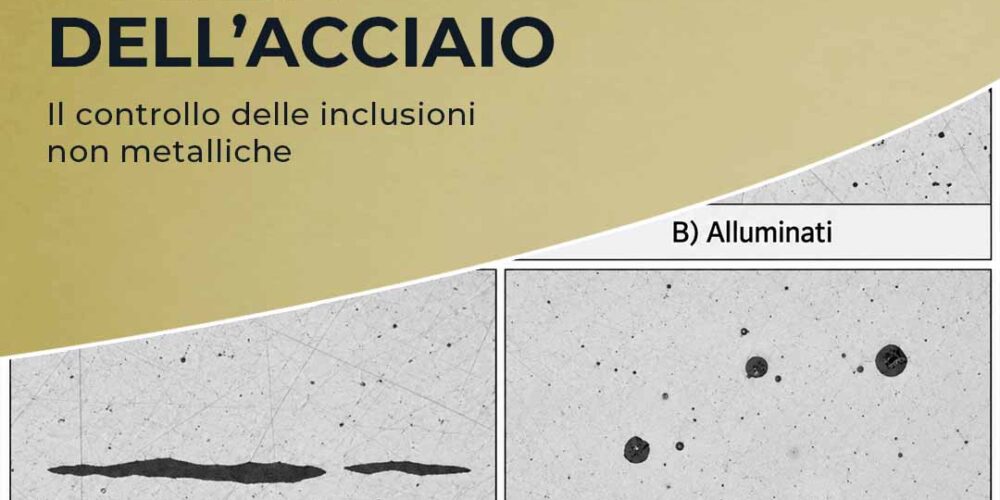
When assessing the quality of a steel, checking its chemical composition…
Ultrasonic Testing in Materials
Ultrasonic testing (UT) is a fundamental non-destructive testing (NDT) technique for analyzing metallic materials, particularly special steels. This technique uses ultrasonic waves to detect internal defects, such as inclusions, porosity, or cracks, without compromising the material’s integrity. Thanks to its precision, ultrasonic testing is widely used in critical sectors like automotive, aerospace, energy, and the mold industry.

Why Perform Ultrasonic Testing?
Ultrasonic control is essential for:
- Ensuring Material Quality: Identifies internal defects like porosity and cracks that could compromise the material’s strength and reliability.
- Verifying Compliance: Ensures the material meets the required standards for the most demanding applications.
- Preventing Issues: Detects potential anomalies early that could lead to failures during operation.
This non-destructive technique allows for the monitoring of properties like structural integrity and homogeneity, offering a detailed and non-invasive analysis.

How Ultrasonic Control Works?
Basic Principle
Ultrasonic testing operates by sending high-frequency sound waves through the material being examined. These waves are either reflected or transmitted based on the presence of discontinuities. A transducer then converts these sound waves into interpretable signals.
Equipment Used
- Ultrasonic Probe: Emits and receives the sound waves.
- UT Equipment: Analyzes and displays the signals on screen.
- Acoustic Couplant: A specific gel applied to the material’s surface to improve wave transmission.
Execution Method
- Preparation of the part to be examined: The surface must be smooth and clean.
- Wave Emission: The probe is placed on the material and sends out ultrasonic waves.
- Signal Analysis: The reflected waves are interpreted to identify any defects.
Types of Detectable Defects.
Ultrasonic control is particularly effective in detecting:
- Preparation of the part to be examined: The surface must be smooth and clean.
- Wave Emission: The probe is placed on the material and sends out ultrasonic waves.
- Signal Analysis: The reflected waves are interpreted to identify any defects.
Factors that Influence Effectiveness
- Material: The material’s density and homogeneity affect how the waves travel.
- Geometry: Complex shapes can reflect waves in unexpected ways.
- Surface Conditions: An uneven surface can reduce the quality of the signals received.
Ultrasonic Control: conclusion.
Ultrasonic testing is an indispensable non-destructive technique for guaranteeing the quality and reliability of metallic materials by detecting defects like porosity and cracks. At Bonomi Acciai, we are committed to supplying high-quality special steels, subjected to rigorous NDT controls, including ultrasonics, to ensure the best performance in your projects, thanks to our collaboration with the Swiss Steel Group mills we represent.