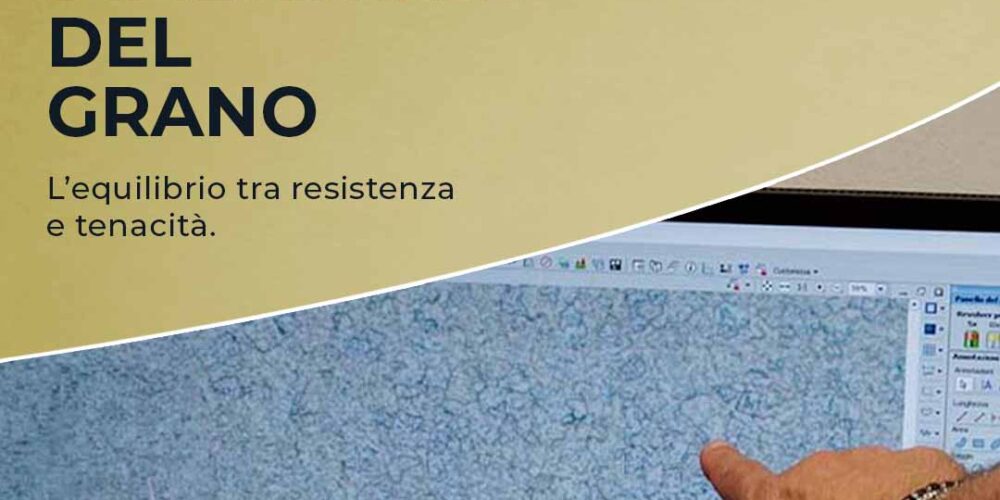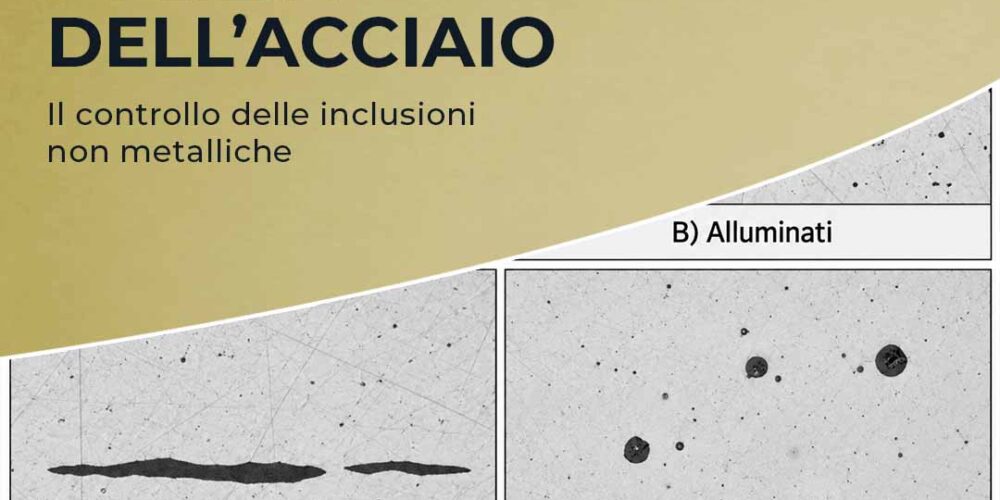
When assessing the quality of a steel, checking its chemical composition…
Heat Treatments: Annealing
In industrial heat treatments, the word annealing is widely used, yet it actually covers several distinct variants. Each variant serves a precise purpose, linked to the material and to the next manufacturing step.
Below we examine five annealing types commonly applied in industry:
- Process Annealing (Ricottura di Lavorabilità)
- Full Annealing (Ricottura Completa)
- Isothermal Annealing (Ricottura Isotermica)
- Stress-Relief Annealing (Ricottura di Distensione)
- Spheroidizing Annealing (Ricottura di Globulizzazione)
For each process we outline the thermal cycle, purpose, metallographic effects, and main applications.
Process Annealing
Typical for parts that will undergo extensive chip-removal machining.
- Heating: below the critical transformation points (580 – 680 °C)
- Soak at temperature
- Slow cooling
Metallographic notes:
- The original structure is preserved.
- Grain size is unchanged.
Result: hardness is reduced, improving machinability.

Full Annealing
A relatively long industrial cycle:
- Heating above the critical points
- Soak long enough to stabilise the structure
- Very slow cooling
Objective: erase the previous microstructure and create a new equilibrium structure of ferrite + pearlite, with grain regeneration and refinement.

Isothermal Annealing
Widely used on forging components made of case-hardening steels as a cost-effective alternative to full annealing (shorter cycle).
- Heat above the A₃ critical point.
- Soak.
- Rapidly cool below the A₁ point.
- Hold until pearlitic transformation is complete.
- Cool to room temperature.
Effects:
- Previous structure is removed.
- New ferrite + pearlite structure forms.
- Grain is regenerated and refined.

Stress-Relief Annealing
Reduces or eliminates internal stresses caused by:
- Machining
- Cold working
- EDM
- Straightening
- Welding
Variants
- Pre-hardening stress relief — on rough-machined parts or dies before semi-finish.
- Stress tempering — on already quenched-and-tempered material.
Typical temperatures
- 600 – 700 °C (standard)
- ~540 °C for quenched-and-tempered steels (30-50 °C below the highest previous tempering temperature to preserve mechanical properties).

Spheroidizing Annealing
Applied to high-carbon steels (e.g., 100Cr6) to:
- Improve machinability on machine tools.
- Facilitate cold forming.
Also known as pendulum annealing:
- Heat close to the A₁ point.
- Oscillate just above/below A₁ for an extended time.
- Very slow cooling to room temperature.
Result: a globular pearlite structure, ideal for machinability and ductility.

Summary Table

Conclusion
Annealing cycles are preparatory heat treatments that optimise machining, stabilise dimensions and deliver the required microstructure before subsequent processing stages.
Bonomi Acciai, Italian representative of Swiss Steel Group, supports designers and die-makers in selecting the most suitable thermal cycle to fully exploit our special-steel potential.
Would you like to learn more?