When assessing the quality of a steel, checking its chemical composition…
Alloy Elements: Nickel
Nickel (Ni) is a widely used alloying element in special steels due to its ability to provide increased mechanical strength, toughness, and mirror-like polishability even at low temperatures. Nickel does not form carbides and therefore does not contribute to wear resistance, but it promotes advanced mechanical properties that make it indispensable in numerous industrial applications.
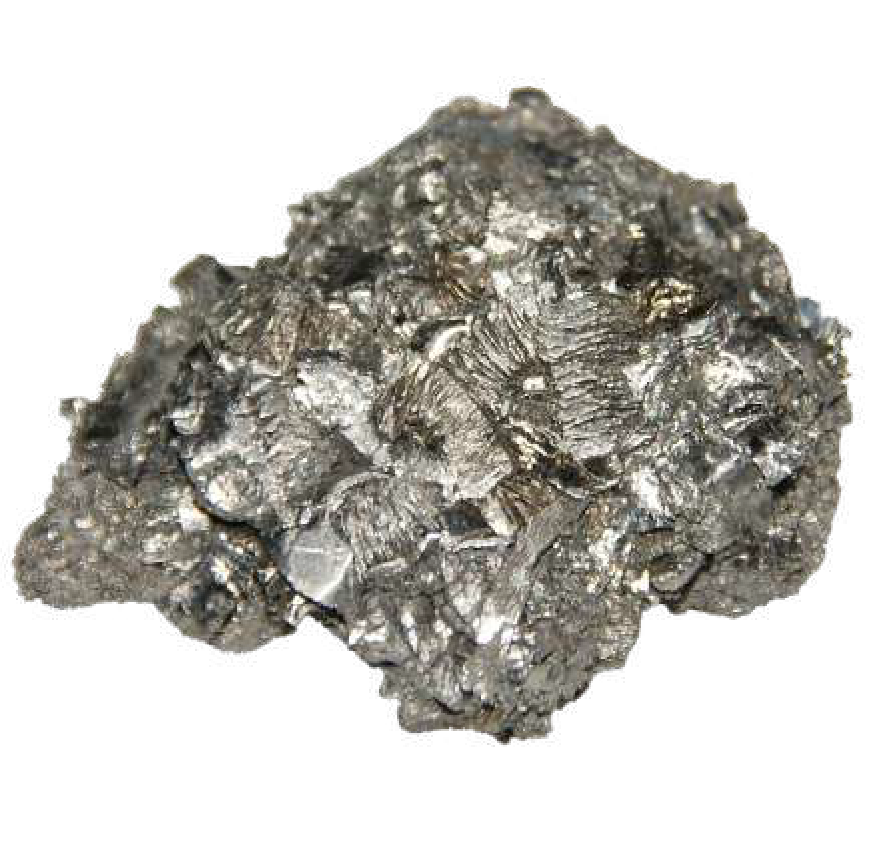
Nickel Alloy Element Sheet
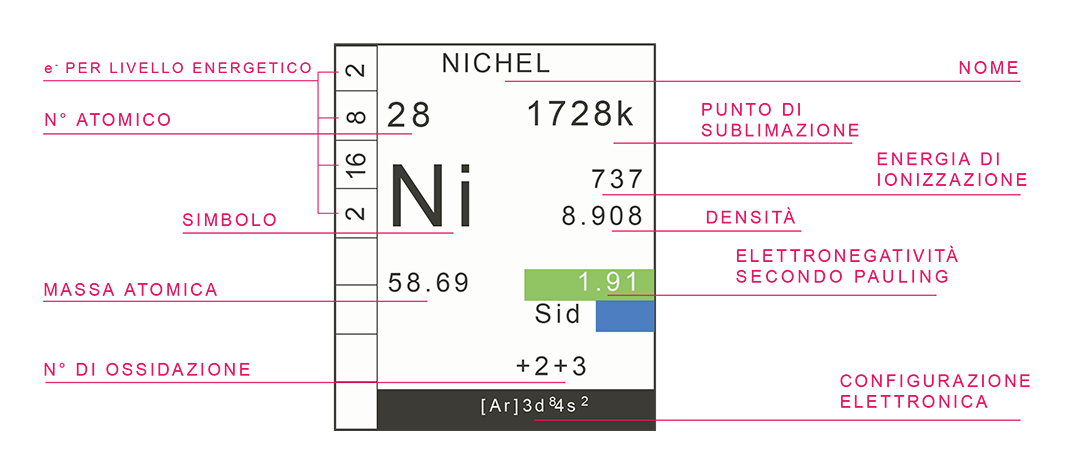
Properties and Influence of Nickel
Nickel (Ni) gives steels a series of distinctive advantages:
- Low-temperature strength and toughness: Nickel increases the mechanical strength of quenched and tempered steels even at low temperatures.
- Mirror finishability: The presence of Nickel facilitates machining and surface finishing of steels, making them ideal for both aesthetic and technical applications.
- Reduction of the critical cooling rate: The addition of Nickel helps lower the critical heating points—thus allowing a reduction in annealing and quenching temperatures—and also reduces the critical cooling rate, resulting in deeper hardening penetration.
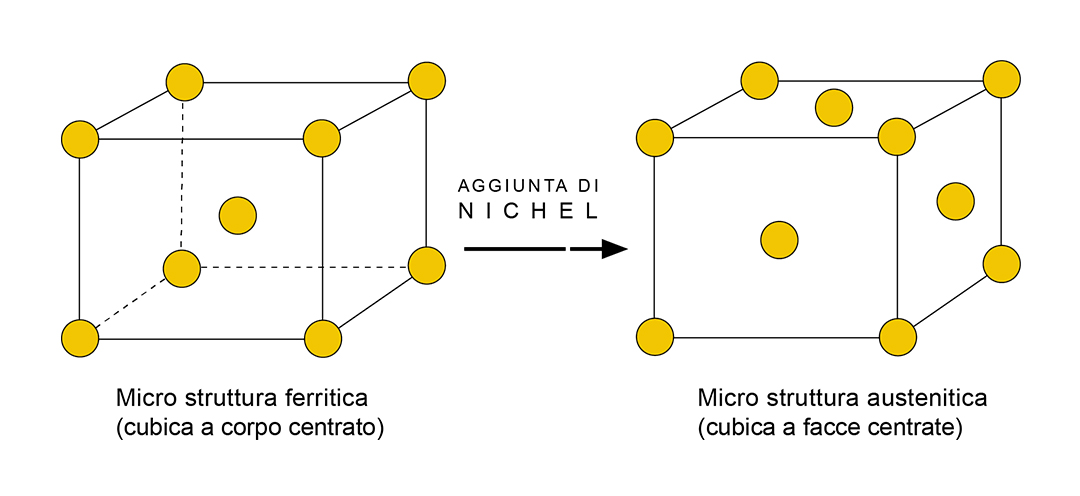
- Formation of austenitic structures: In stainless steels with high chromium content, Nickel enables the formation of austenitic structures below room temperature, which is why it is classified as an austenitizing element. This allows the transformation of the crystalline microstructure from BCC (body-centered cubic) to FCC (face-centered cubic), contributing to improved ductility and corrosion resistance.
Microstructural Transformation
Two images show the structural difference with and without the addition of Nickel, in high chromium steels:
-
Ferritic Microstructure (BCC): Body-Centered Cubic structure, found in steels with low Nickel content.
-
Austenitic Microstructure (FCC): Face-Centered Cubic structure, containing at least 6% Nickel, which provides greater ductility and strength.
In the tool steel sector, steels with significant Nickel content are easily identified by their Werkstoff number, which starts with 27 (for example, 1.2767).
Nickel: Conclusion
Nickel (Ni) is an important element in the production of special steels for demanding applications. Thanks to its unique properties, it improves toughness, machinability, and ductility, making these steels suitable for numerous industrial sectors. At Bonomi Acciai, as representatives of the Swiss Steel Group, we supply special steels containing Nickel and guarantee high-quality, tested, and certified materials to meet the most advanced needs of modern industry.