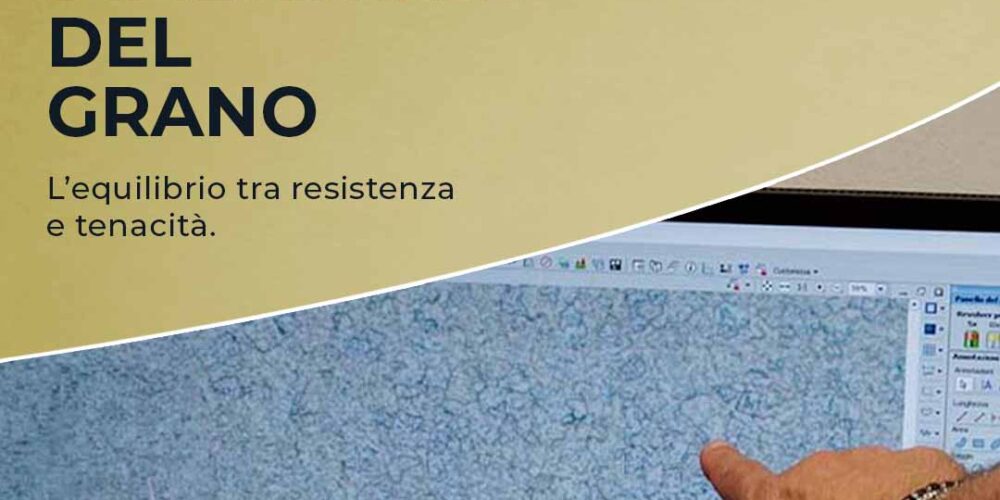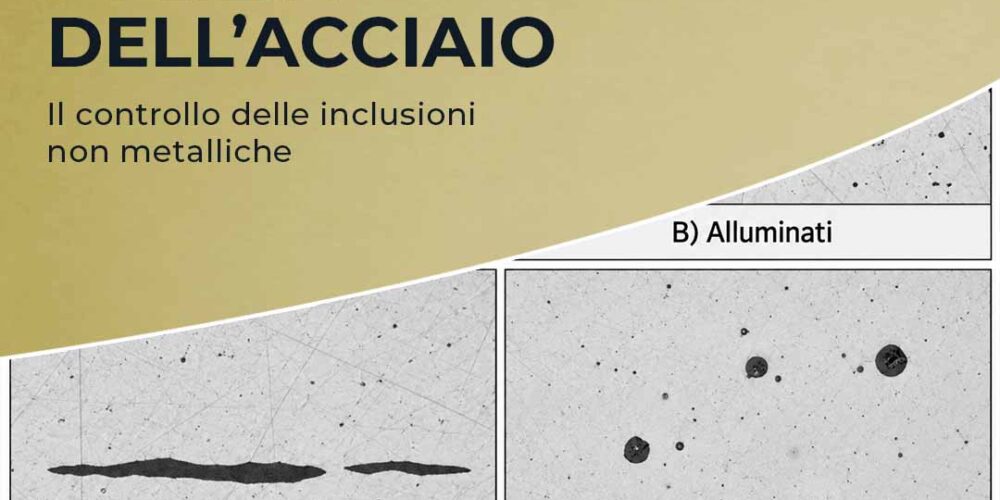
When assessing the quality of a steel, checking its chemical composition…
Deformations and Dimensional Changes During Heat Treatment
During the heat treatments of special steels – such as quenching, tempering, or annealing – it is common to observe deformations and dimensional changes. Understanding their causes is essential to prevent them and to obtain functional, reliable, and project-compliant components.
What do we mean by:
- Deformation: alteration of the geometry of a part (e.g., warping, out-of-square, ovalisation, torsion, etc.)
- Dimensional change (or more precisely, volumetric change): variation in volume without a geometrical deformation.
Although these are different phenomena, they often occur together. Understanding their origin allows you to control them through appropriate design and heat treatment choices.
Origin of Deformations
Geometrical deformations are mainly caused by internal stresses resulting from:
- Temperature differences between core and surface
- Non-uniform microstructural transformations
- Residual stresses from mechanical machining (work hardening)
- Positioning errors inside the furnace
Key principle:
The lower the ΔT (temperature difference) between the core and the surface, the lower the thermal stress—and therefore the deformation—generated.

Main Causes of Deformation
Residual stresses from machining
Operations such as milling or grinding induce stress states that add to those generated by heat.
Thermal inhomogeneities
Uneven preheating
Excessively fast cooling
Sections with varying thickness
Directionality of quenching jets
Positioning in the furnace
The way the part is placed greatly affects heat distribution and the resulting stress pattern.
Volumetric Changes: What Causes Them?
Volumetric change is directly linked to the phase transformations of steel during rapid cooling (quenching).
| Initial Phase | ➡ | Final Phase | Volume Change |
|---|---|---|---|
| Ferrite / Pearlite | ➡ | Austenite | ↓ volume |
| Austenite | ➡ | Martensite | ↑ volume |
Each phase change involves a volume variation that adds up to deformation caused by temperature gradients.

Esempio pratico
An industrial component before and after quenching may show:
- Angular shifts near sharp edges
- Longitudinal torsion
- Local dimensional deviations from 0.1 mm up to several millimetres, depending on material, section geometry, and the treatment applied

Conclusion
Controlling deformations and dimensional changes is only possible by thoroughly understanding the material, its properties, and the dynamics of the heat treatment process.
At Bonomi Acciai, representatives of the Swiss Steel Group, we support die makers and designers with carefully selected special steels and targeted technical expertise, ensuring consistent performance and dimensional reliability even in the most demanding applications.
Would you like to learn more?