
When assessing the quality of a steel, checking its chemical composition…
Tensile Testing of Materials
Tensile testing is one of the most fundamental tests used to determine a material’s mechanical properties. This test evaluates how a material reacts when subjected to a tensile force, providing crucial information about its strength and elasticity.
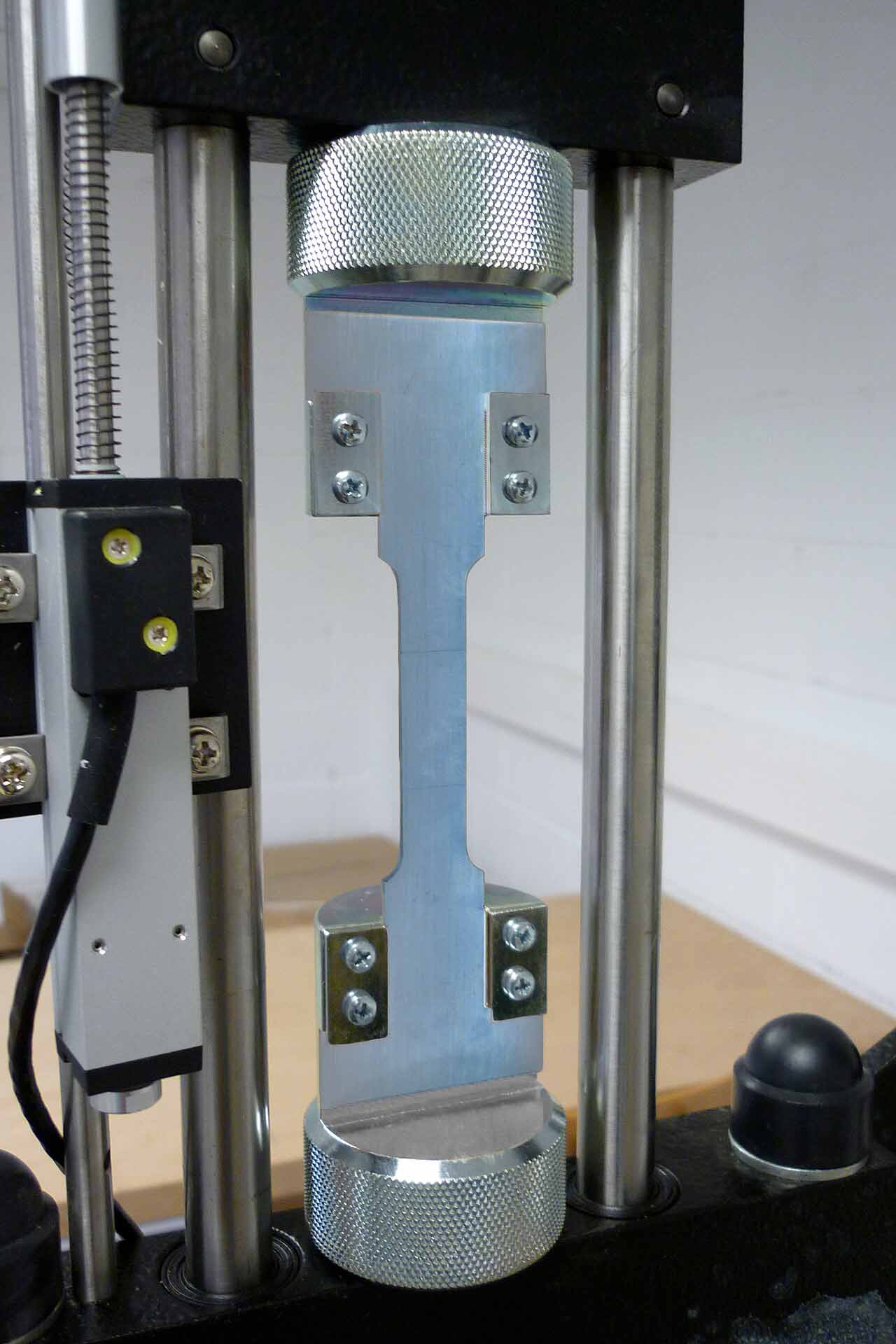
Why Perform the Tensile Test?
The tensile test provides essential data for the design and use of materials in engineering applications. Among the mechanical properties determined are:
- Yield Strength: The point at which the material begins to deform plastically.
- Tensile Strength: The maximum stress the material can withstand before fracture.
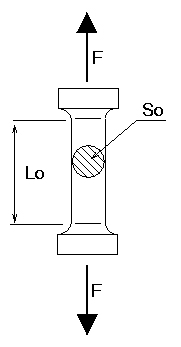
- Percentage Elongation: The permanent increase in the original length (L0) expressed as a percentage.
- Reduction in Area: The percentage decrease in the original cross-sectional area (S0) at the fracture point.
It is fundamentally important to know these values to ensure that steel components meet the required safety and performance requirements.
How is the tensile test performed?
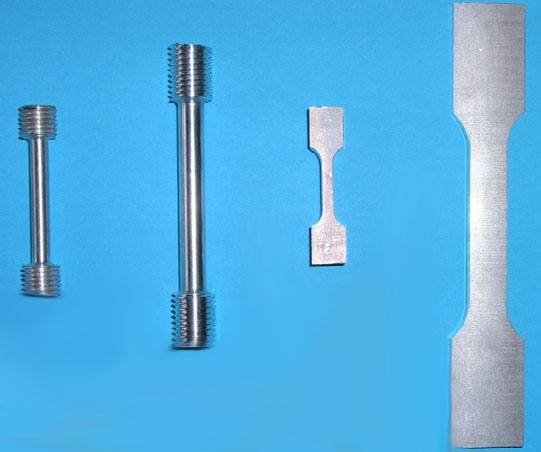
Specimens used to measure tensile strength can have various shapes and dimensions, depending on the applicable standards and the material being examined.
During the test, the applied force and the elongation of the specimen are recorded, yielding a stress-strain curve.
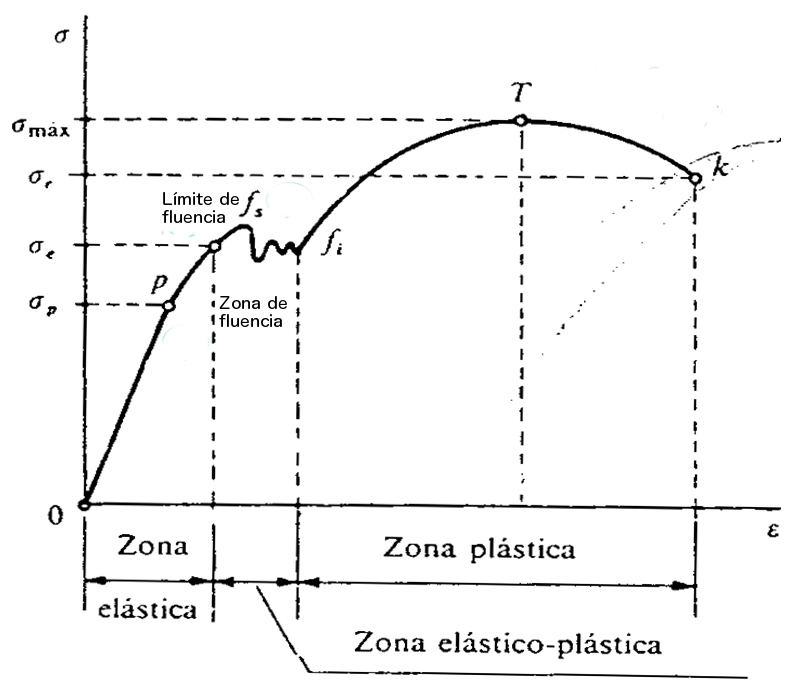
This graph allows for the determination of the material’s various mechanical properties, highlighting the elastic and plastic behavior phases until fracture.
Interpreting the Results in Tensile Testing:
The stress-strain diagram obtained from the tensile test provides detailed information about the material’s behavior. Specifically, it allows for the identification of:
- Elastic Zone: Where the material deforms elastically and returns to its original shape once the load is removed.
- Yield Point (or Yield Strength): The point where permanent plastic deformation begins.
- Plastic Zone: The material deforms permanently under load.
- Fracture: The final point of the test, where the material breaks.

Factors Influencing the Tensile Test.
Several factors can influence the results of a tensile test:
- Chemical composition of the material.
- Microstructure obtained through heat treatments and metallurgical processes.
- Specimen preparation, including precision in dimensions and surface finish.
- Speed of load application during the test.
- Temperature at which the test is performed.
It is fundamental that the tensile test is performed according to specific standards (such as UNI EN norms) to ensure reliable and comparable results.
The Tensile Test: Conclusion.
Tensile testing is essential for understanding the mechanical behavior, elasticity, and mechanical properties of materials, ensuring they are suitable for their intended applications. At Bonomi Acciai, we are committed to supplying tested and certified special steels, produced by the Swiss Steel Group mills we represent.